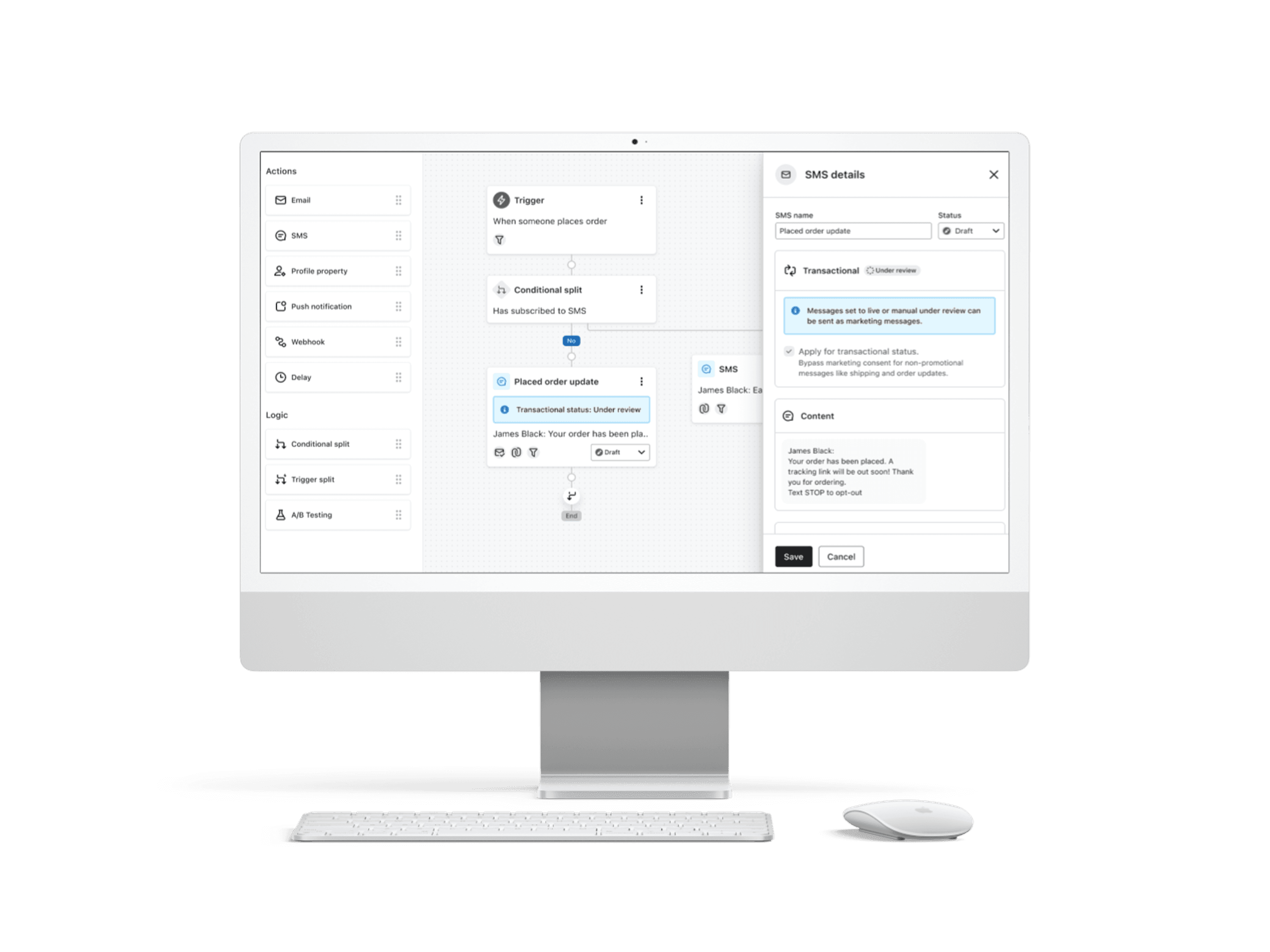
A platform‑level messaging experience that eliminated a $500k manual review burden by making transactional emails safer, faster to approve, and easier to manage for Klaviyo and its customers.
🚧 the challenge
Klaviyo supports both promotional and transactional messages. Transactional emails (order confirmations, password resets, shipping updates) are critical: if they fail, customers lose trust and support teams get flooded.
Design problem: Klaviyo’s transactional email review process was manual, slow, and expensive—delaying critical messages and costing an estimated $500k per year in internal time.
Some teams experienced:
Long delays before they could send essential transactional messages.
Confusion about why templates were rejected or stuck in review.
Risk of mis‑classified messages hurting deliverability and compliance.
This breakdown caused:
A painful experience for brands waiting to go live.
High operational cost for Klaviyo’s internal reviewers.
Increased risk around compliance and deliverability.
solution
Transactional messaging introduces a safer, more scalable way to review and send critical emails. The new experience:
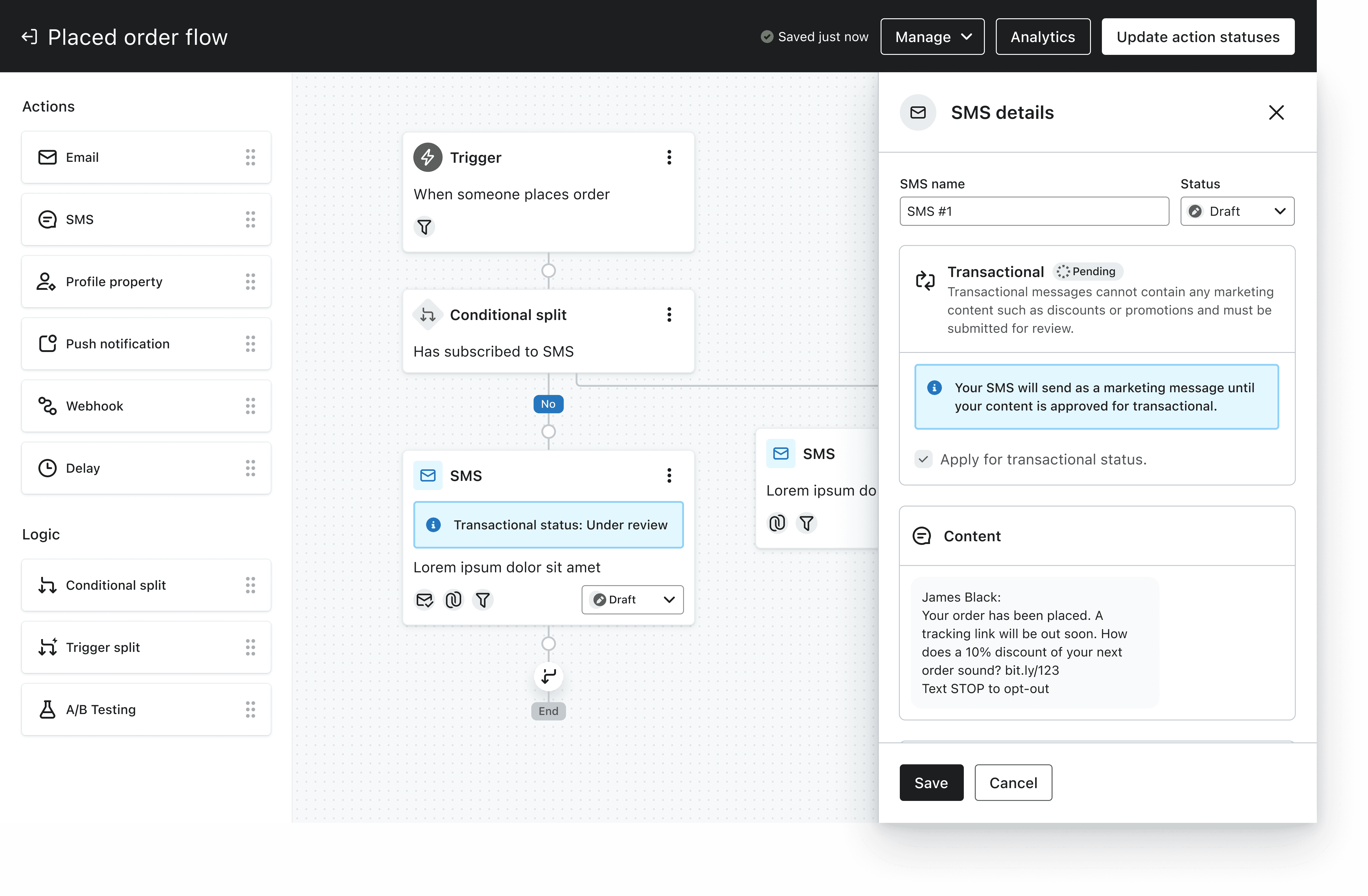
Guides template creation with clear guardrails between promotional and transactional content.
Uses AI‑assisted checks to flag risky patterns before human review.
Streamlines review workflows so internal teams focus only on high‑risk cases.
Gives customers visibility into review status, reasons for rejection, and next steps.
sooo, instead of…
Manually reading every line of every template and emailing back-and-forth with customers,
you now have:
A guided compose experience with built‑in constraints.
Automated checks that catch common policy and deliverability issues.
A clear path from draft → review → approved → live.
👩🏽💼 my role: sole product designer
I owned design from discovery through delivery, partnering with a lead PM, content designer, behavioral designer, researcher, and engineering teams.
Led a cross‑functional project kickoff to align on risks, goals, and success metrics.
Mapped the end‑to‑end lifecycle for transactional templates across teams.
Designed AI‑assisted and self‑serve workflows for template review and approval.
Ran discovery and usability testing with customers and internal reviewers.
🔎 discovery research

I conducted:
A project kickoff workshop with analytics, PM, engineering, content, behavioral design, and research.
A review of existing transactional workflows and support tickets.
Concept testing with low‑fidelity prototypes.
findings


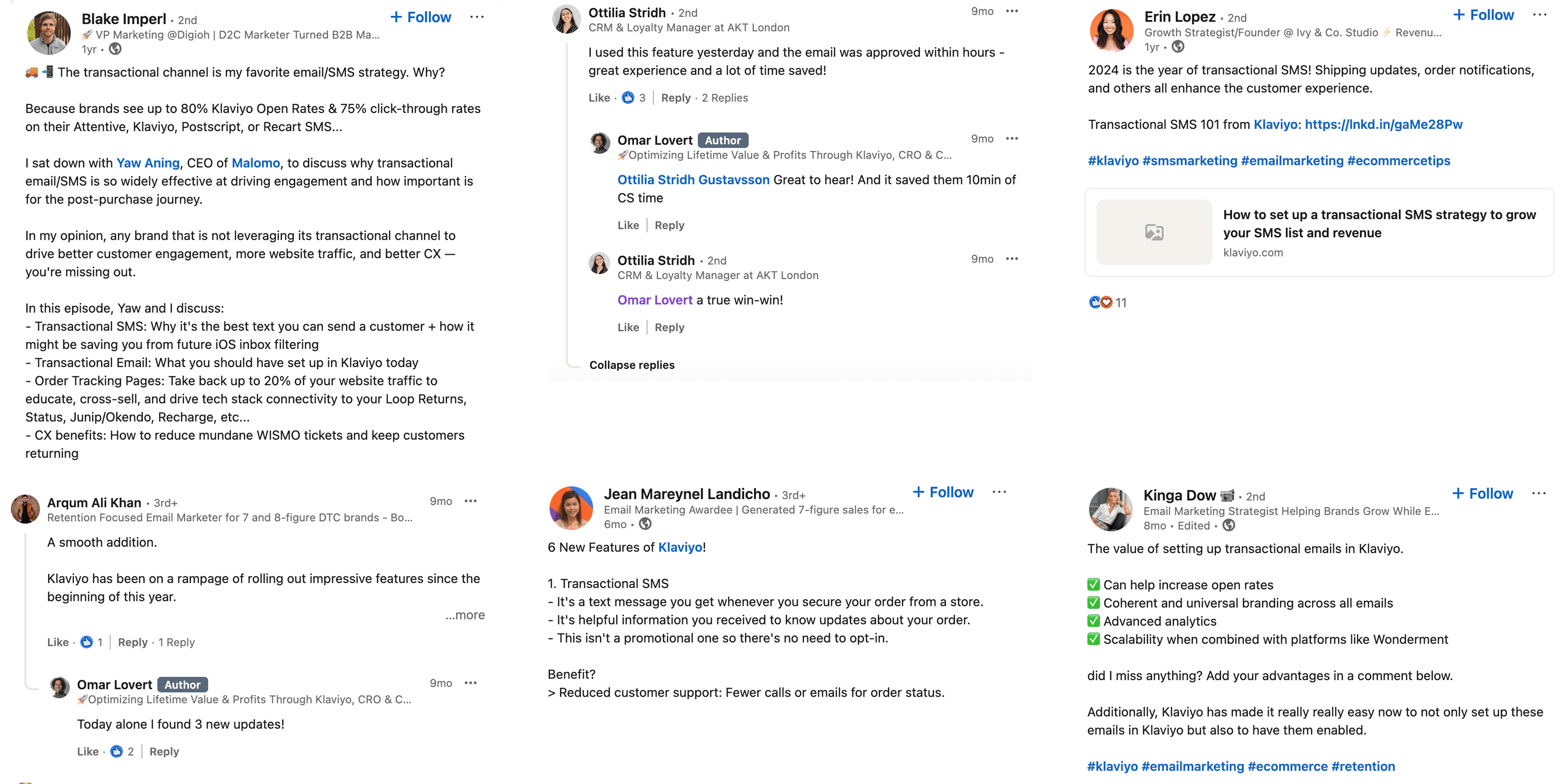
Reviewers spent a significant portion of time scanning templates for the same set of issues (policy, content type, risky patterns).
Customers lacked transparency into why their templates were blocked or how to fix them.
“Transactional vs promotional” rules were not obvious to marketers.
discovery interview findings
Customers wanted clear guidance on what qualifies as transactional content.
Internal teams wanted tools that prioritize highest‑risk templates, not more UI.
Both groups cared about speed to approval without sacrificing safety.
who we're designing for
Primary: Technical and lifecycle marketers responsible for transactional comms.
Secondary: Internal reviewers and deliverability teams ensuring safety and compliance.
user needs
A review flow that feels fast and predictable, not opaque.
Clear, actionable feedback when templates need changes.
Guardrails that prevent risky patterns before they reach reviewers.
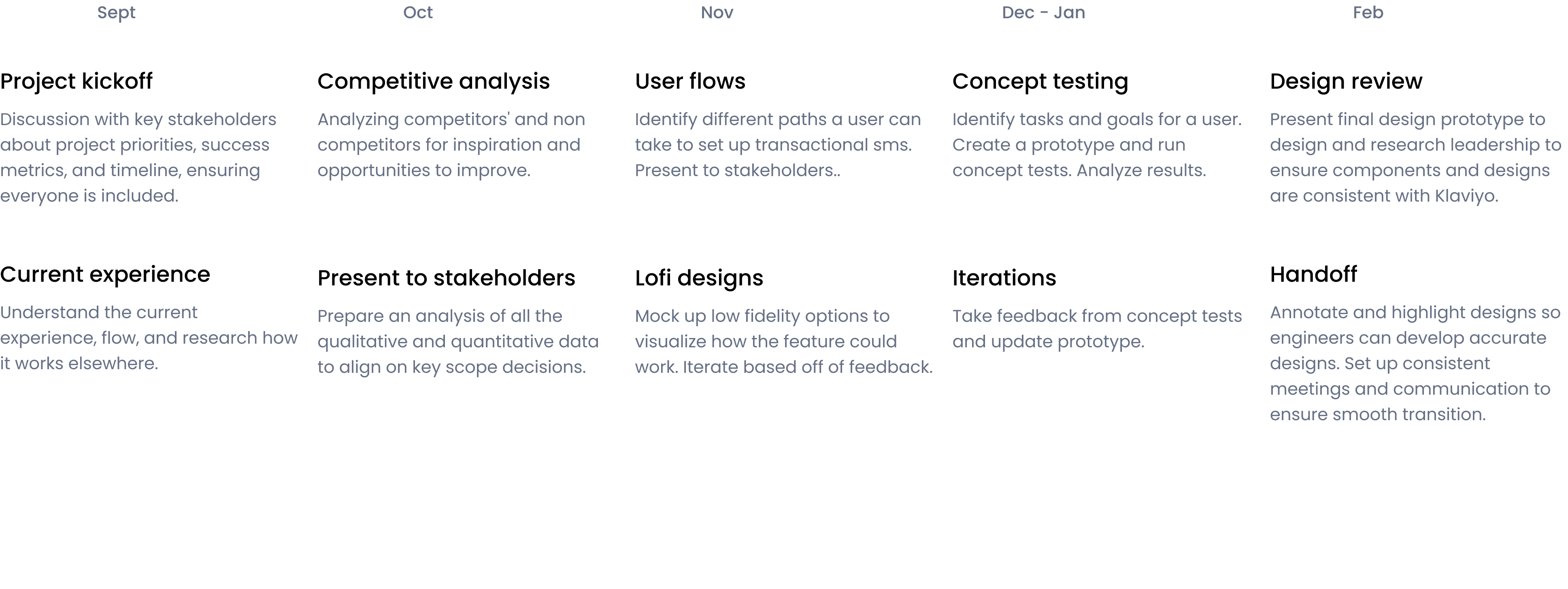
timeline
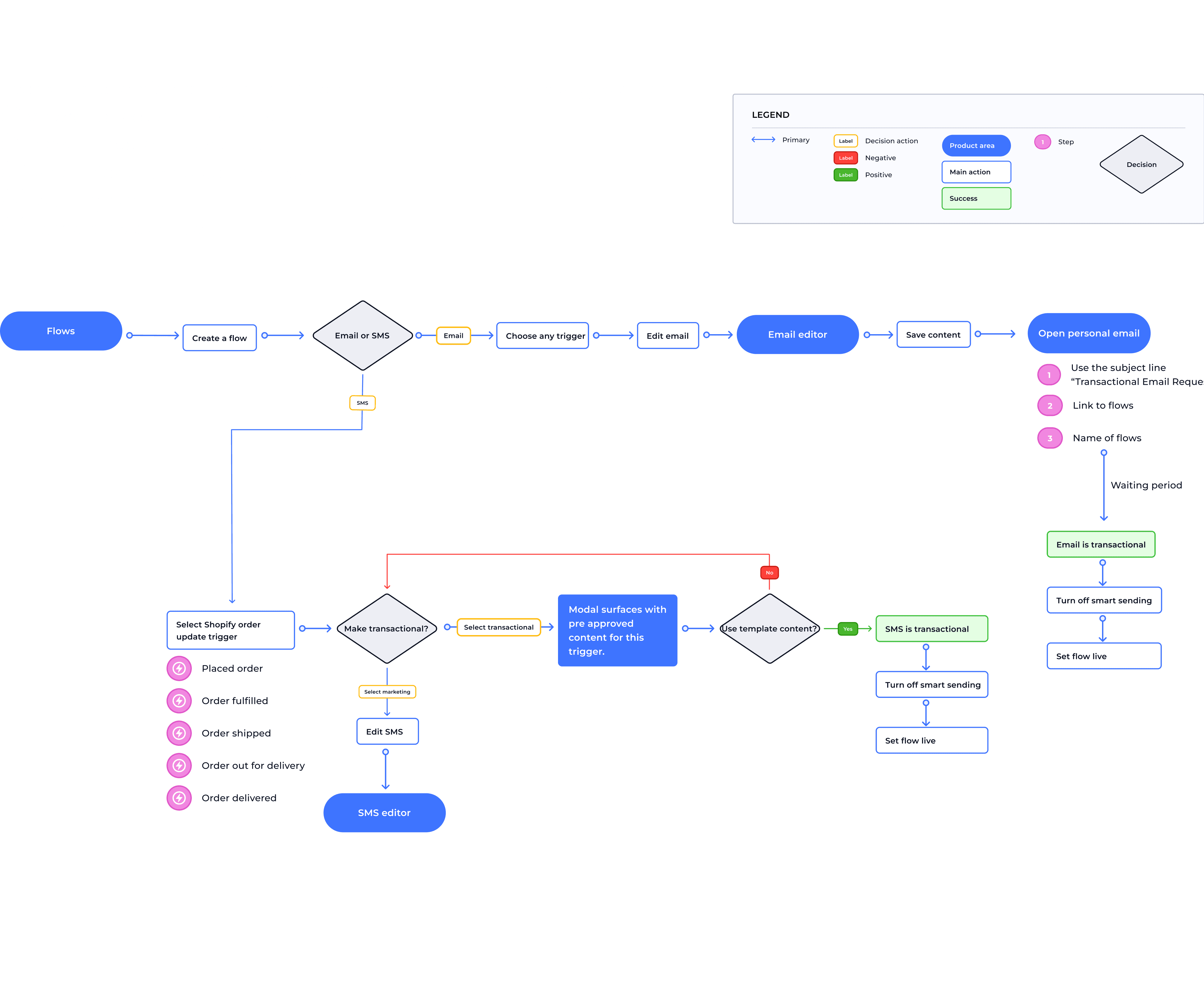
current user flow
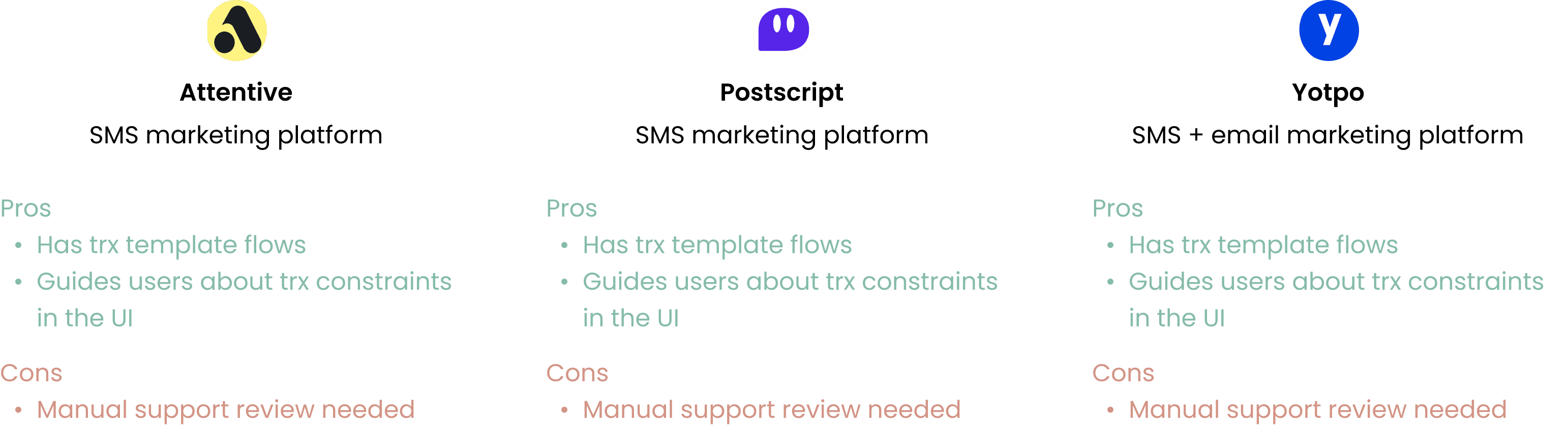
Today the experience for transactional emails and SMS messages differ in location, request process, trigger selection, waiting period, and available templates.
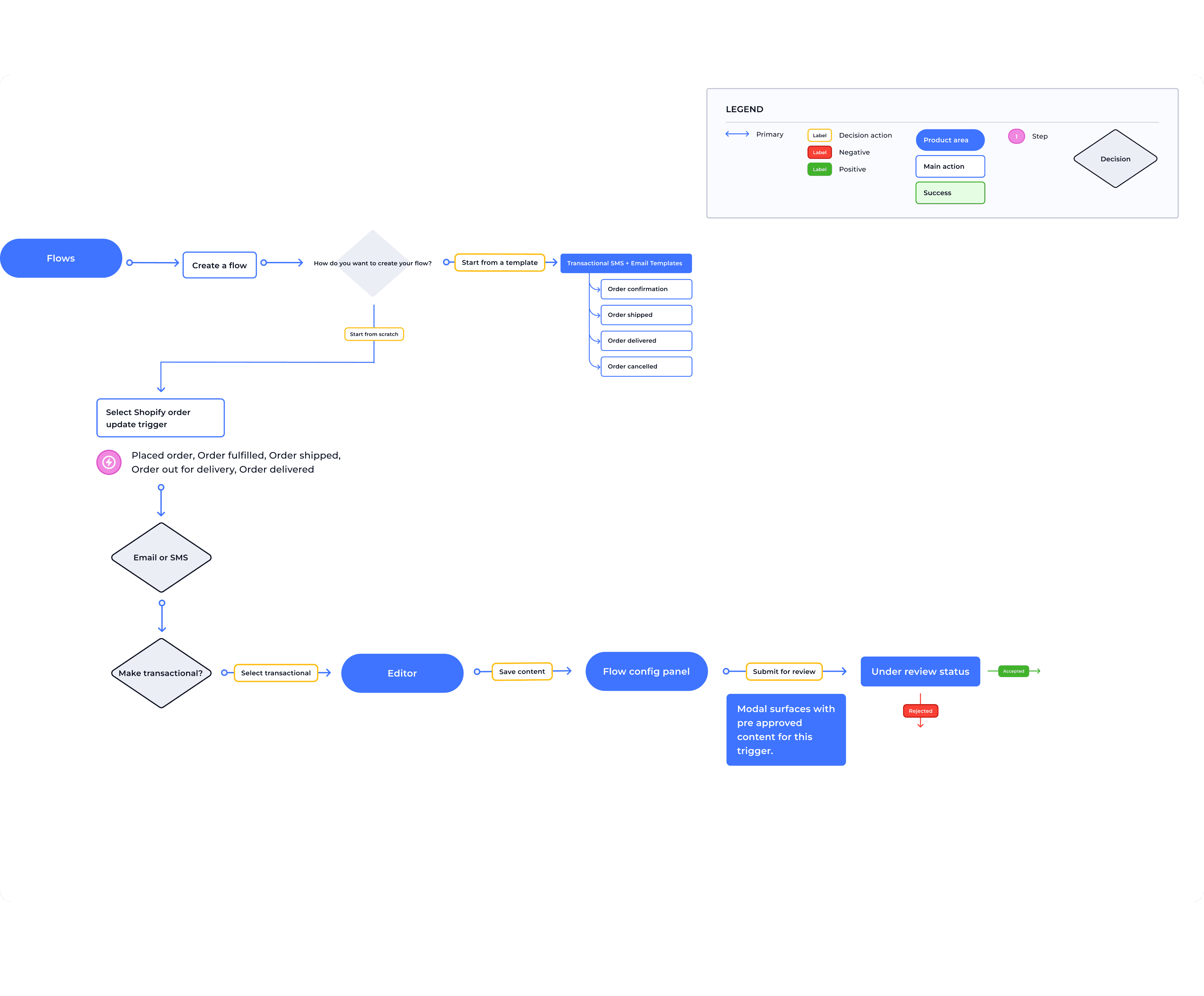
new user flow
Proposing a consistent user flow to reduce cognitive load on customers needing to learn a different way to configure transactional for sms, emails, and any other channels Klaviyo decides to add in the future.
lo fi exploration
Creating a consistent user experience so that users would not have to learn a different way to configure transactional for sms, emails, and any other channels Klaviyo decides to add in the future.
HMW provide a consistent and in app experience for the user?
I explored 5 different options on how the user would be able to configure a message as transactional without needing a support representative to provide assistance.
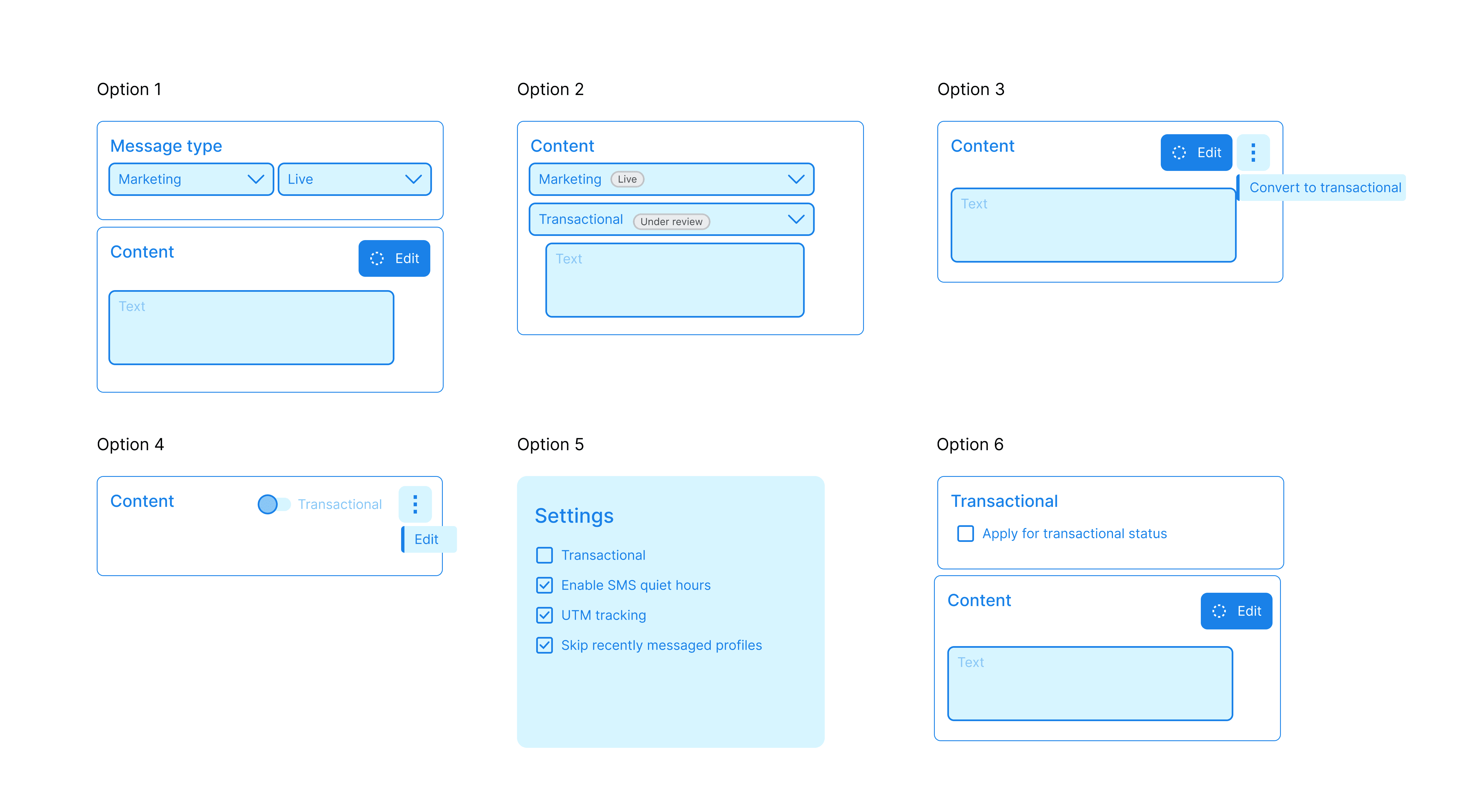
hi fi / moving forward with option 6
After presenting options to project stakeholders and receiving feedback, I decided to move forward with the checkbox option.
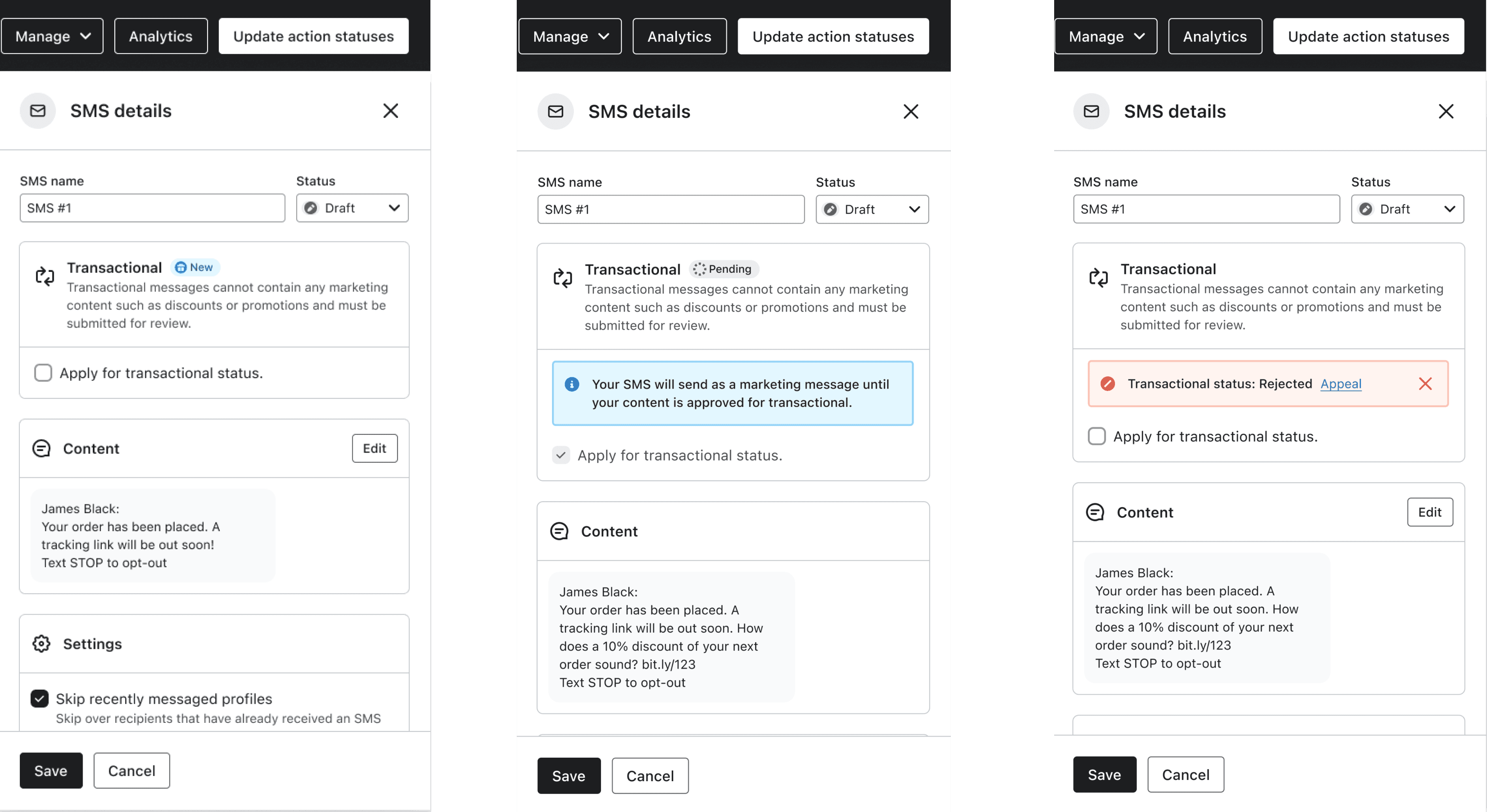
hi fi / usability testing
Collaborated with a user researcher to build out a moderator guide with 4 critical workflows we wanted to test prior to implementation and launch.
Task 1: Edit and submit a message for transactional status
Task 2: Check approval/denial records
Task 3: Fix a rejected message.
Task 4: Appeal a rejected message.
hi fi / research results
Users really enjoyed being able to request reviews in app.
It's not obvious why or that you need to apply for transactional status
Some users were confused on when to apply for an appeal.
hi fi / prototype
Edit and submit a message for transactional status
Check approval/denial records + fix rejected message
Appeal a rejected message
hi fis / release tracking
Customer's data is protected by GDPR so we cannot measure if transactional recipients are more likely to buy or less likely to unsubscribe but we can follow other metrics to determine how the feature is performing. We wanted to track monthly revenue associated with the feature, how many people are using the feature, and how many people are setting a flow live.
55K AI review requests over the last 90 days which amounts to $3.6M saved for the “last 90 days rolling” and $60k in MRR attributed to transactional. There is also a very high rate of Flows set live (~80%) vs typical SMS Flow action (~24%)
public reaction